Centrifugal Sand Pump Pressure Drop: Causes and Troubleshooting Guide
Apr 09, 2026
Centrifugal sand pumps are key components in drilling solid control systems. A drop in pressure directly results in insufficient flow rate and unstable fluid supply, affecting the normal operation of desanders, desilters, hydrocyclones and other equipment. Common causes and corresponding solutions are listed below:
I. Air Ingress and Sealing Issues on Suction Line
Symptoms
Significantly low discharge pressure, severe fluctuation of pressure gauge, accompanied by noise and cavitation sound, with drastically insufficient flow rate.
Main Causes
1. Aging or damaged gaskets on suction line flanges, or loose bolts, leading to air infiltration into the pump casing.
2. Severe wear of sand pump mechanical seal or packing seal, resulting in air leakage due to seal failure.
3. Cracks in suction line or loose joints causing vacuum air intake.
4. Failure to prime the pump or incomplete venting during startup, causing air accumulation inside the pump and resulting in air binding.
Troubleshooting Methods
1. Inspect the suction line, flanges and joints comprehensively; replace aged gaskets and tighten bolts evenly.
2. Inspect and replace worn mechanical seals or packing to ensure tight sealing.
3. Repair or replace damaged pipelines to eliminate all air leakage points.
4. Open the pump vent valve, refill the pump with liquid completely, and restart only after full air evacuation.
II. Clogging of Suction Line or Strainer
Symptoms
Muffled noise during pump operation, gradual decrease in discharge pressure and reduced flow rate.
Main Causes
1. Suction strainer clogged by cuttings, sand particles and mud clods in drilling fluid.
2. Excessive elbows, undersized pipe diameter, or scaling and deposition in the suction line after long-term service.
3. Suction foot valve stuck or blocked by foreign materials.
Troubleshooting Methods
1. Disassemble and clean the suction strainer to remove all debris.
2. Clear the suction line and remove scaling and deposits on the inner wall.
3. Check the opening and closing status of the foot valve, remove jammed foreign materials, and replace the foot valve if necessary.
4. Optimize pipeline layout, reduce unnecessary elbows, and ensure unobstructed suction.
III. Impeller Damage, Wear or Corrosion
Symptoms
Pump runs normally but discharge pressure never reaches the rated value, with obvious insufficient displacement.
Main Causes
1. Long-term erosion by sand-laden drilling fluid thins and damages impeller vanes, resulting in insufficient centrifugal force.
2. Impeller corrosion or cavitation perforation causing structural failure.
3. Loose connection between impeller and sand pump shaft leading to slipping.
Troubleshooting Methods
1. Disassemble the pump to inspect the impeller; replace it directly in case of severe wear, deformation or perforation.
2. Retighten the impeller lock nut to prevent loosening and slipping.
3. Select wear-resistant and corrosion-resistant impellers to extend service life.
IV. Excessive Clearance of Wear Rings (Liners)
Symptoms
Pump runs with normal noise but low pressure, with insignificant pressure rise when throttling the discharge valve.
Main Causes
1. Excessive mating clearance due to long-term wear of wear rings, causing massive internal fluid backflow.
2. Corrosion or deformation of wear rings leading to seal failure.
Troubleshooting Methods
1. Measure the clearance between impeller wear ring and casing wear ring; replace immediately if exceeding the standard.
2. Install new wear rings to restore designed mating clearance and reduce internal leakage.
V. Clogging and Scaling in Pump Casing and Flow Passages
Symptoms
Unstable discharge pressure with frequent fluctuations, accompanied by vibration and unstable flow rate.
Main Causes
1. Solid phase in drilling fluid deposits and cakes in the pump casing and volute flow passages, causing blockage.
2. Welding slag, stones, rubber debris and other foreign materials entering the pump, obstructing fluid flow.
Troubleshooting Methods
1. Shut down and disassemble the pump; thoroughly clean fouling and debris in the pump casing, volute and flow passages.
2. Inspect and repair local eroded or corroded areas to ensure smooth flow passages.
VI. Abnormal Drilling Fluid Properties
Symptoms
High pump load, high current, failure to reach rated pressure, especially obvious under high-viscosity conditions.
Main Causes
1. Excessively high viscosity of drilling fluid causes sharp increase in flow resistance and drastic degradation of pump head.
2. Over-high density of drilling fluid increases pump operating load.
3. Excessively high sand content accelerates wear and increases flow resistance.
Troubleshooting Methods
1. Adjust drilling fluid properties reasonably to reduce viscosity and density.
2. Strengthen the solid control system to lower sand content.
3. Increase pump speed appropriately to compensate for pressure loss caused by high viscosity.
VII. Discharge Line Clogging or Abnormal System Back Pressure
Symptoms
Low pump discharge pressure, severe pipeline vibration, and abnormal operation of hydrocyclones and desanders.
Main Causes
1. Discharge line valve not fully open, or valve core detached or blocked.
2. Clogged nozzles of desanders and hydrocyclones causing abnormal rise in discharge back pressure.
3. Scaling or partial deformation of discharge line reducing flow area.
Troubleshooting Methods
1. Inspect discharge valves to ensure full opening; repair faulty valves.
2. Clean clogged nozzles of hydrocyclones and desanders as well as pipeline blockages.
3. Clear and repair the discharge line to ensure unobstructed fluid discharge.
VIII. Power and Speed Issues
Symptoms
Weak pump operation, noticeably low pressure, and low motor current.
Main Causes
1. Insufficient motor voltage or low frequency leading to inadequate rotating speed.
2. Loose or slipping V-belts causing serious speed loss.
3. Incorrect motor wiring resulting in reverse pump rotation (negligible pressure output).
Troubleshooting Methods
1. Check power supply voltage and frequency to ensure rated values are achieved.
2. Tighten transmission belts and replace aged or slipping belts.
3. Verify motor rotation direction; adjust three-phase wiring sequence if rotating in reverse.
IX. Bearing or Pump Shaft Failure
Symptoms
Severe pump vibration, abnormal noise, large pressure fluctuations, and frequent seal leakage.
Main Causes
1. Bearing wear, excessive clearance or fracture.
2. Bending or deformation of pump shaft causing eccentric impeller operation.
3. Misalignment of coupling leading to unbalanced operation.
Troubleshooting Methods
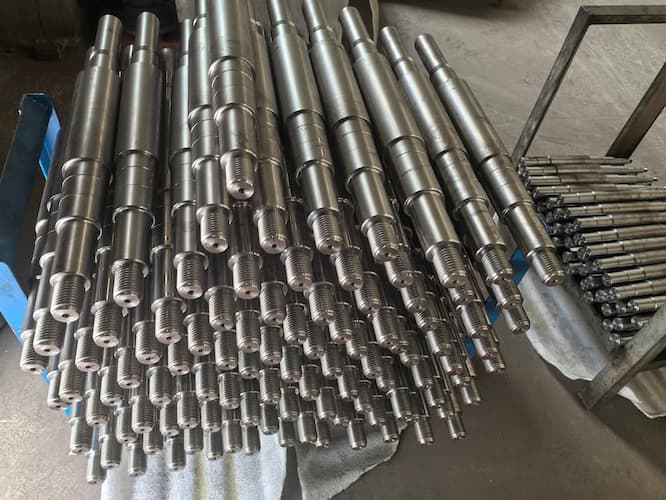
1. Replace damaged bearings; straighten or replace bent pump shafts.
2. Recalibrate coupling alignment and tighten connecting components.
Read More



 Language :
 English
 Русский
 عربي
عربي
 GET A QUOTE


 IPv6 network supported