What is the well control system on a drilling rig?
Apr 16, 2025
The well control system of a drilling rig is a crucial device to ensure the safety of drilling operations. The following provides a detailed introduction to its various components:
Ⅰ.Blowout Preventer (BOP) Stack
Ram Blowout Preventer
Structure: It is mainly composed of components such as the housing, ram assembly, side doors, piston rods, and hydraulic cylinders. The housing is the main body of the ram blowout preventer, inside which components like the ram assembly are installed. The ram assembly includes full-open rams and half-open rams, which are key components for achieving wellhead sealing. The side doors are used for installing and removing the ram assembly. The piston rods connect the ram assembly and the hydraulic cylinders, transmitting hydraulic pressure. The hydraulic cylinders provide the power to move the rams.
Working Principle: When it is necessary to close the wellhead, the hydraulic system injects high-pressure oil into the hydraulic cylinders, pushing the piston rods to drive the rams to move horizontally. The rams then squeeze each other at the center of the wellhead to achieve the sealing of the wellhead. The full-open rams completely seal the wellhead when there is no drill string in the wellhead. The half-open rams, according to the size of the drill string, grip the drill string and seal the annular space when there is a drill string in the wellhead.
Characteristics: It has a reliable sealing performance and can withstand a relatively high wellhead pressure. It is easy to operate, acts quickly, and can be remotely controlled. It has various types and specifications, which can adapt to different drilling working conditions and drill string combinations.
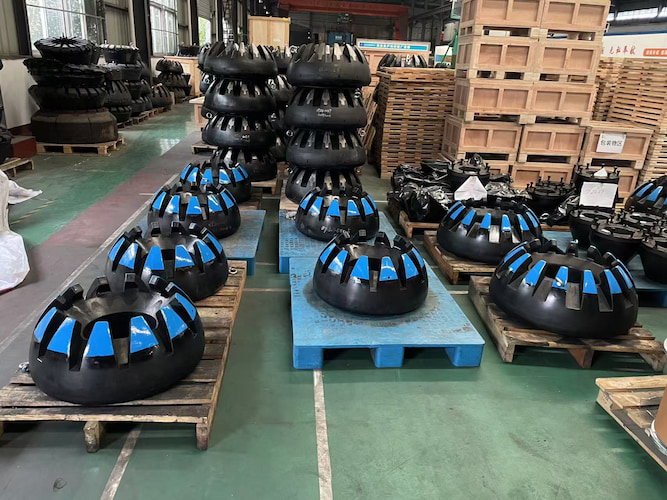
Annular Blowout Preventer
Structure: It is mainly composed of components such as the annular blowout preventer element, piston, housing, and top cover. The annular packing element is the core component of the annular blowout preventer, usually made of elastic materials such as rubber and has an annular structure. The piston is located below the element and closely cooperates with it. The housing supports the element and the piston and connects to the wellhead. The top cover is used to fix the element and seal the upper space.
Working Principle: When hydraulic oil enters the hydraulic cylinder below the piston, it pushes the piston to move upward. The piston squeezes the element, causing the element to elastically deform, thereby gripping the drill string or sealing the wellhead annular space. When it is necessary to open the wellhead, the hydraulic system releases the hydraulic pressure, and the element returns to its original shape under its own elastic force, and the wellhead is opened.
Characteristics: It can adapt to drill strings of different sizes and shapes, including kelly bars, drill pipes, and drill collars. It has a good sealing performance and allows the drill string to move up and down and rotate to a certain extent. However, it cannot withstand high pressure for a long time, and the element is prone to wear and needs to be replaced regularly.
Rotating Blowout Preventer
Structure: It is mainly composed of components such as the rotating assembly, rotating blowout preventer sealing element, housing, bearings, and hydraulic control system. The rotating assembly includes components such as the rotating shaft, rotating head, and connecting flanges, which are the components for the rotation of the drill string. The sealing element is used to seal the annular space between the drill string and the wellhead. The housing supports the rotating assembly and the sealing element and connects to the wellhead. The bearings are installed between the rotating shaft and the housing to ensure the smooth rotation of the rotating assembly. The hydraulic control system is used to control the gripping and releasing of the sealing element.
Working Principle: During the drilling process, the drill string is connected to the rotating blowout preventer through the rotating assembly. When it is necessary to control the wellhead pressure, the hydraulic system provides pressure to the sealing element, causing the element to grip the drill string and achieve wellhead sealing. At the same time, the rotating assembly, supported by the bearings, can rotate along with the drill string to ensure the normal progress of the drilling operation.
Characteristics: It allows the drill string to rotate and move up and down under pressure, improving the drilling efficiency. It has a reliable sealing performance and can withstand a certain wellhead pressure. However, its structure is complex, and the maintenance requirements are relatively high.
Ⅱ.Choke Manifold and Kill Manifold
Choke Manifold
Structure: It is mainly composed of components such as choke valves, flat valves, pipelines, pressure gauges, and thermometers. The choke valve is the core component of the choke manifold, used to regulate the flow rate and pressure of the drilling fluid. The flat valve is used to control the opening and closing of the pipeline. The pipelines connect all the components to form the flow channel of the drilling fluid. The pressure gauges and thermometers are used to monitor the pressure and temperature of the drilling fluid in the choke manifold.
Working Principle: In well control operations, by adjusting the opening degree of the choke valve, the flow area of the drilling fluid is changed, thereby controlling the flow rate of the drilling fluid and the wellhead backpressure. When the wellhead pressure rises, the opening degree of the choke valve is reduced to increase the wellhead backpressure, causing the bottomhole pressure to rise and balance the formation pressure. When the wellhead pressure drops, the opening degree of the choke valve is increased to reduce the wellhead backpressure and prevent the bottomhole pressure from being too high, which may lead to lost circulation.
Characteristics: The choke valve has good throttling performance and adjustment accuracy, which can precisely control the flow rate and pressure of the drilling fluid. The flat valve has a good sealing performance and can withstand a relatively high pressure. The choke manifold has a variety of connection methods and specifications and can be selected according to different drilling equipment and working conditions.
Kill Manifold
Structure: It is mainly composed of components such as a kill pump, check valve, safety valve, pipelines, and pressure gauges. The kill pump is the core equipment of the kill manifold, used to pump the kill fluid into the well. The check valve prevents the backflow of the kill fluid. The safety valve is used to protect the kill manifold and wellhead equipment and prevent the pressure from being too high. The pipelines connect all the components to form the conveying channel of the kill fluid. The pressure gauges are used to monitor the pressure in the kill manifold.
Working Principle: In the event of a kick or blowout, first, the wellhead blowout preventer is closed, and then the kill pump is started to pump the prepared kill fluid into the well through the kill manifold. The kill fluid mixes with the formation fluid in the well and gradually balances the formation pressure to restore the pressure balance in the well. During the kill operation, by adjusting the displacement and pressure of the kill pump and observing the readings of the pressure gauges, the safety and effectiveness of the kill operation are ensured.
Characteristics: The kill pump has sufficient displacement and pressure to quickly pump the kill fluid into the well. The check valve and safety valve ensure the safety and reliability of the kill manifold. The pipelines of the kill manifold usually use high-strength and corrosion-resistant materials, which can withstand high pressure and harsh working environments.
Ⅲ.Well Control Instruments
Drilling Fluid Tank Level Monitor
Structure: It is mainly composed of components such as sensors, transmitters, and display instruments. The sensors are installed in the drilling fluid tank and are used to measure the liquid level height. The transmitters convert the signals measured by the sensors into standard electrical or pneumatic signals. The display instruments are installed in the operation room or control console of the drilling platform and are used to display the numerical value and change situation of the liquid level height.
Working Principle: The sensors measure the liquid level height in the drilling fluid tank through principles such as buoyancy, hydrostatic pressure, and ultrasonic waves and transmit the measured signals to the transmitters. The transmitters convert the signals and then transmit them to the display instruments for display. When the liquid level height changes, the numerical value on the display instrument will also change accordingly. The operator can promptly determine whether abnormal situations such as kick or lost circulation occur in the well according to the rise and fall of the liquid level.
Characteristics: It has high measurement accuracy and can accurately measure small changes in the liquid level height. It has a fast response speed and can promptly reflect the dynamic changes of the liquid level. It has a variety of measurement methods and signal output forms and can adapt to different structures of the drilling fluid tank and control systems.
Standpipe Pressure Sensor
Structure: It is mainly composed of components such as a pressure-sensitive element, signal conversion circuit, and housing. The pressure-sensitive element usually uses materials such as strain gauges and piezoelectric crystals and is used to sense the pressure of the drilling fluid in the standpipe. The signal conversion circuit converts the weak electrical signals generated by the pressure-sensitive element into standard electrical signals. The housing protects the pressure-sensitive element and the signal conversion circuit from interference and damage by the external environment.
Working Principle: When the pressure of the drilling fluid in the standpipe acts on the pressure-sensitive element, the pressure-sensitive element deforms, causing changes in its parameters such as resistance or capacitance. The signal conversion circuit converts these parameter changes into electrical signals and transmits them to the instrument control system of the drilling platform through cables. The instrument control system processes and displays the received electrical signals. The operator can judge the change trend of the bottomhole pressure according to the change situation of the standpipe pressure and promptly adjust the drilling parameters and take well control measures.
Characteristics: It has high measurement accuracy and can accurately reflect the changes in the pressure of the drilling fluid in the standpipe. It has good stability and can work stably for a long time in harsh working environments. It has good anti-interference ability and can avoid the influence of factors such as electromagnetic interference on the measurement results.
Casing Pressure Sensor
Structure: Similar to the standpipe pressure sensor, it is mainly composed of components such as a pressure-sensitive element, signal conversion circuit, and housing. The pressure-sensitive element is installed on the wellhead casing and directly senses the pressure in the casing. The signal conversion circuit converts the pressure signal into an electrical signal. The housing protects the pressure-sensitive element and the signal conversion circuit.
Working Principle: When the pressure in the casing changes, the pressure-sensitive element senses the pressure change and generates corresponding electrical signal changes. The signal conversion circuit converts these changes into standard electrical signals and transmits them to the instrument control system of the drilling platform through cables. The instrument control system processes and displays the signals. The operator can judge the size of the wellhead backpressure and the relationship between the bottomhole pressure and the formation pressure according to the change situation of the casing pressure, providing an important basis for well control operations.
Characteristics: It has high measurement accuracy and reliability and can accurately measure the pressure changes in the casing. It is easy to install and can be directly installed on the wellhead casing. It has good sealing performance to prevent the fluid in the casing from leaking.
Ⅳ.Control System
Hydraulic Control System
Structure: It is mainly composed of components such as a hydraulic station, control pipelines, directional control valves, relief valves, and accumulators. The hydraulic station includes components such as an oil pump, motor, oil tank, and filter, which are used to provide hydraulic power. The control pipelines connect the hydraulic station with devices such as the blowout preventer stack, choke manifold, and kill manifold to transmit hydraulic oil. The directional control valves are used to control the flow direction of the hydraulic oil to achieve the action control of each device. The relief valves are used to regulate the system pressure and prevent the pressure from being too high. The accumulators are used to store hydraulic energy and provide additional power for the system in case of an emergency.
Working Principle: The motor drives the oil pump to extract hydraulic oil from the oil tank, pressurizes it, and then transports it to each hydraulic device through the control pipelines. When it is necessary to control the action of a certain device, by operating the directional control valve, the flow direction of the hydraulic oil is changed, and the hydraulic oil enters the hydraulic cylinder of the corresponding device, pushing the piston to move and realizing the opening or closing of the device. The relief valve automatically adjusts the flow rate of the hydraulic oil according to the system pressure to maintain the system pressure stable. When the system pressure drops, the accumulator releases the stored hydraulic energy to supplement the system pressure and ensure the normal action of the device.
Characteristics: The hydraulic control system has the advantages of fast response speed, high control accuracy, and large output force, and can quickly and accurately control the actions of the well control devices. It has good reliability and stability and can work stably for a long time in harsh working environments. Redundant design and safety protection measures are adopted, which improve the safety and fault tolerance of the system.
Remote Control Console
Structure: It is mainly composed of components such as the console body, display screen, operation buttons, control circuit, and power supply system. The console body is the core component of the remote control console, inside which the control circuit and various electronic components are installed. The display screen is used to display the status information of the well control devices, pressure data, etc. The operation buttons are used to remotely control the actions of the well control devices. The control circuit controls the actions of the hydraulic control system or other actuators according to the operation instructions of the operator. The power supply system provides power support for the remote control console and is usually equipped with a backup power supply, such as a battery pack.
Working Principle: The operator issues control instructions by operating the buttons on the remote control console. The control circuit converts the instructions into electrical signals and transmits them to the hydraulic control system or other actuators through cables or wireless communication methods. The hydraulic control system controls the actions of the well control devices according to the received signals. At the same time, the status information and pressure data of the well control devices are collected by sensors and transmitted to the display screen of the remote control console for the operator to monitor in real time. In case of an emergency, the backup power supply is automatically put into use to ensure the normal operation of the remote control console.
Characteristics: The remote control console realizes the remote operation and monitoring of the well control devices, improving the safety and convenience of well control operations. It has a good human-machine interaction interface, and the operation is simple and intuitive. It has the function of data recording and storage and can record and analyze the data during the well control operation process, providing a basis for subsequent accident investigation and handling.
Read More



 Language :
 English
 Русский
 عربي
عربي
 GET A QUOTE


 IPv6 network supported